
” The photographers who build lasting businesses are not the ones who never change. They are the ones who keep experimenting without losing sight of who they are.”
SAM DOCKER
The wedding industry never stays still. Couples change, platforms change, visual trends move on and the methods that once filled a diary can suddenly stop working. For photographers, that creates a difficult balance. How do you remain relevant without chasing every trend or losing the style that made people book you in the first place?
In this episode of the Grow Your Photography Business podcast, Sam Docker reflects on 14 years of photographing weddings and the lessons that come from building a creative business through several shifts in the market. The conversation covers far more than camera settings or editing styles. It explores the willingness to experiment, the danger of becoming comfortable, the reality of burnout and the importance of building a business that can change with your life.
Sam is open about the fact that bookings across the photography industry feel quieter. For many photographers who entered the market during or after the pandemic, this may be the first meaningful dip they have experienced. His perspective is reassuring without pretending everything is easy. A difficult season does not automatically mean a failed business, but it does demand honesty, awareness and action.
Key Takeaways
- Adapting your work does not mean copying other photographers.
- Creative experimentation gives you more tools to serve modern couples.
- Comfort can become risky when the market and your audience are changing.
- Boundaries and realistic booking limits are essential for avoiding burnout.
- Long-term success requires resilience, curiosity and a willingness to begin again.
A changing market does not mean the end of opportunity
Quieter booking periods can feel personal, particularly when social media appears to show everyone else thriving. Sam is refreshingly direct about the current landscape. He has not spoken to many photographers who feel exceptionally busy, and he recognises that the first significant downturn can be unsettling for anyone who has only known a buoyant market.
The useful question is not whether the wedding industry has changed. It clearly has. The better question is how your business will respond. Couples are still getting married, but their priorities, budgets and buying habits continue to evolve. They may discover suppliers through different channels, expect faster communication or look for a visual style that reflects the way they consume imagery elsewhere.
Future-proofing your wedding photography business starts with paying attention. It means noticing what couples respond to, understanding what is happening in the wider creative world and deciding which changes are useful for your own brand. That is very different from panicking and copying whatever happens to be popular that week.
Adapting is not the same as copying
A social media post from Sam sparked debate after he shared how his approach had changed. He now uses a 15-35mm lens after years of relying on prime lenses. He sometimes tilts the frame, uses flash during the daytime, experiments with motion blur and has brought film back into his wedding work.
The point was never that every photographer should make the same choices. It was that creative businesses need room to explore. You can observe trends, test new ideas and still produce work that feels unmistakably yours. Your core principles can remain intact while the tools available to you expand.
This distinction matters. Copying starts with somebody else’s result and tries to reproduce it. Experimentation starts with curiosity. You test an approach, respond to the wedding in front of you and decide whether the outcome adds something valuable to your work. The result still passes through your experience, instincts and perspective.
For wedding photographers, this can be as simple as asking what else is possible once the safe photograph has been captured. Take the clean portrait first, then explore a slower shutter speed, a different angle or a burst of direct flash. Not every experimental frame needs to enter the final gallery. The value is in keeping your creative instincts active.
Your style should be a foundation, not a cage
Photographers often speak about style as though it must remain fixed forever. Consistency is important because it helps couples understand what they are booking. However, consistency does not require stagnation.
Sam describes new techniques as additional tools in his toolbox. He still creates the portraits and documentary photographs that have shaped his work for years. He has simply added more ways to interpret a wedding day. This gives couples a richer gallery and gives him more opportunities to stay engaged with the creative process.
A recognisable style is built from far more than one lens, preset or composition. It includes the moments you notice, the way you interact with people, your understanding of light, your timing and the feeling you create across a complete gallery. Those qualities can remain familiar even as individual techniques evolve.
Comfort is one of the biggest risks in a creative business
After more than a decade in business, repeating what has always worked can feel sensible. It is efficient, familiar and less likely to fail. It can also make a business vulnerable.
Sam has experienced that lesson outside photography. A previous business failed because it continued using the same approach after the wider landscape had shifted. That experience now informs the way he thinks about wedding photography. Refusing to adapt can feel like protecting your identity, when in reality it may be protecting your comfort.
Marketing offers an obvious example. Facebook image posts once played a central role in how photographers reached clients. Then Instagram feeds became essential, followed by Stories, video, Reels and TikTok. The platforms will continue to change. A business owner does not need to adopt every channel, but they do need a reliable way to remain visible to the people they want to reach.
The longer you are in business, the more willing you need to be to feel like a beginner again. Trying a new format, revisiting your website or learning a different creative technique can be uncomfortable. That discomfort is often evidence that you are moving rather than standing still.
Staying creative after hundreds of weddings
Wedding photography is full of genuine variety, yet repetition still creeps in. Timelines follow familiar patterns. Certain venues appear regularly. The same family group combinations return week after week. When the season is busy, creativity can become secondary to simply getting through the workload.
Sam’s enthusiasm is rooted in the unpredictability of weddings. Even after 14 years, he still feels a knot of nerves before a job. That uncertainty is part of the appeal. A wedding cannot be completely controlled, so the photographer has to trust their process, stay alert and respond to what unfolds.
The most sustainable form of creativity is not constant reinvention. It is attention. Notice the light, the relationships, the atmosphere and the small details that belong to that particular celebration. Then use your expanding creative toolbox to interpret them. The aim is not to make every image unusual. It is to avoid photographing every wedding on autopilot.
Work ethic matters, but so do boundaries
Sam speaks passionately about giving every couple his full effort. Early in his career, he worked alongside videographers who spent more time in their car than at the wedding. The experience stayed with him because it represented the opposite of the standard he wanted to set. He may critique his own work, but he wants to leave knowing he gave the couple everything he could.
That level of commitment is valuable, but it becomes difficult to maintain when the workload is unsustainable. Sam is honest about periods of burnout, particularly during the years when he photographed more than 50 or 60 weddings. Faster editing tools may reduce post-production time, but they cannot remove the emotional and physical demand of repeatedly showing up for long wedding days.
His practical advice is simple: create boundaries before the diary fills. Reserving one weekend each month during peak season could protect family time, energy and enthusiasm. A booking is not automatically profitable if it leaves you too exhausted to serve the next client properly or enjoy the life your business is supposed to support.
A sustainable photography business is not necessarily the one with the highest annual wedding count. It is the one that allows you to produce consistent work, care for your clients and keep enough energy for the people and priorities outside the business.
Do not let social media define success
One of the most valuable parts of the episode is Sam’s honesty about success. Despite being widely respected in the photography industry, he does not present himself as someone who has everything figured out. He talks openly about a challenging year, uncertainty around his next steps and the need for something to change financially.
That honesty matters because social media removes context. A photographer can share a beautiful destination wedding, launch a course or announce a new project while still facing uncertainty behind the scenes. Comparing your complete business to somebody else’s selected highlights creates a distorted view of what success looks like.
Sam’s approach is to take other people’s announcements with a pinch of salt and keep working on the things he believes in. That includes weddings, mentoring, a new photography workflow product and his podcast. Not every idea needs a guaranteed outcome before it begins. Sometimes the next phase of a business is discovered by following the projects that create energy and solving problems you understand deeply.
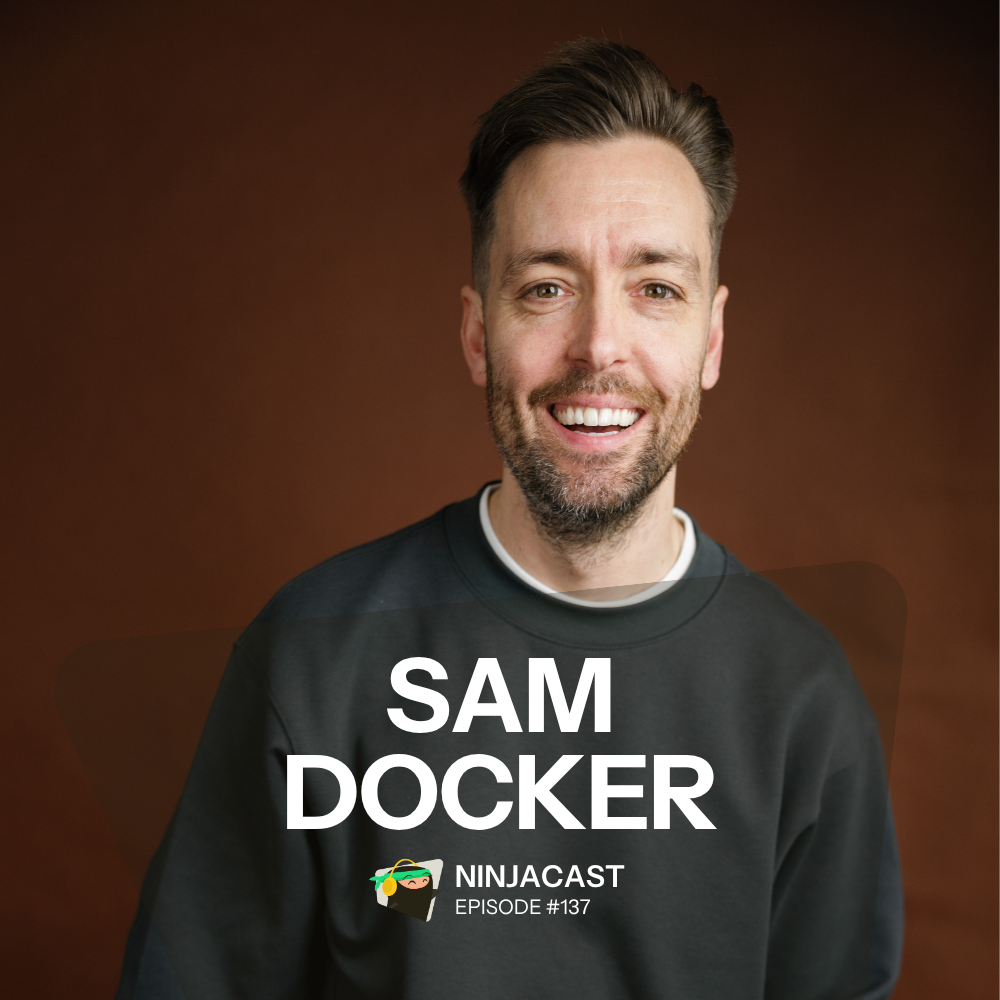
About Sam Docker
Sam Docker is a Derby-based wedding photographer whose work blends documentary observation with an editorial approach inspired by art, fashion and human connection. Over more than a decade in the industry, he has photographed weddings across the UK and internationally, while also supporting other photographers through workshops, mentoring and education. Sam continues to explore new creative and business projects alongside his wedding work.
Website: samdocker.co
Instagram: @samdockerphoto